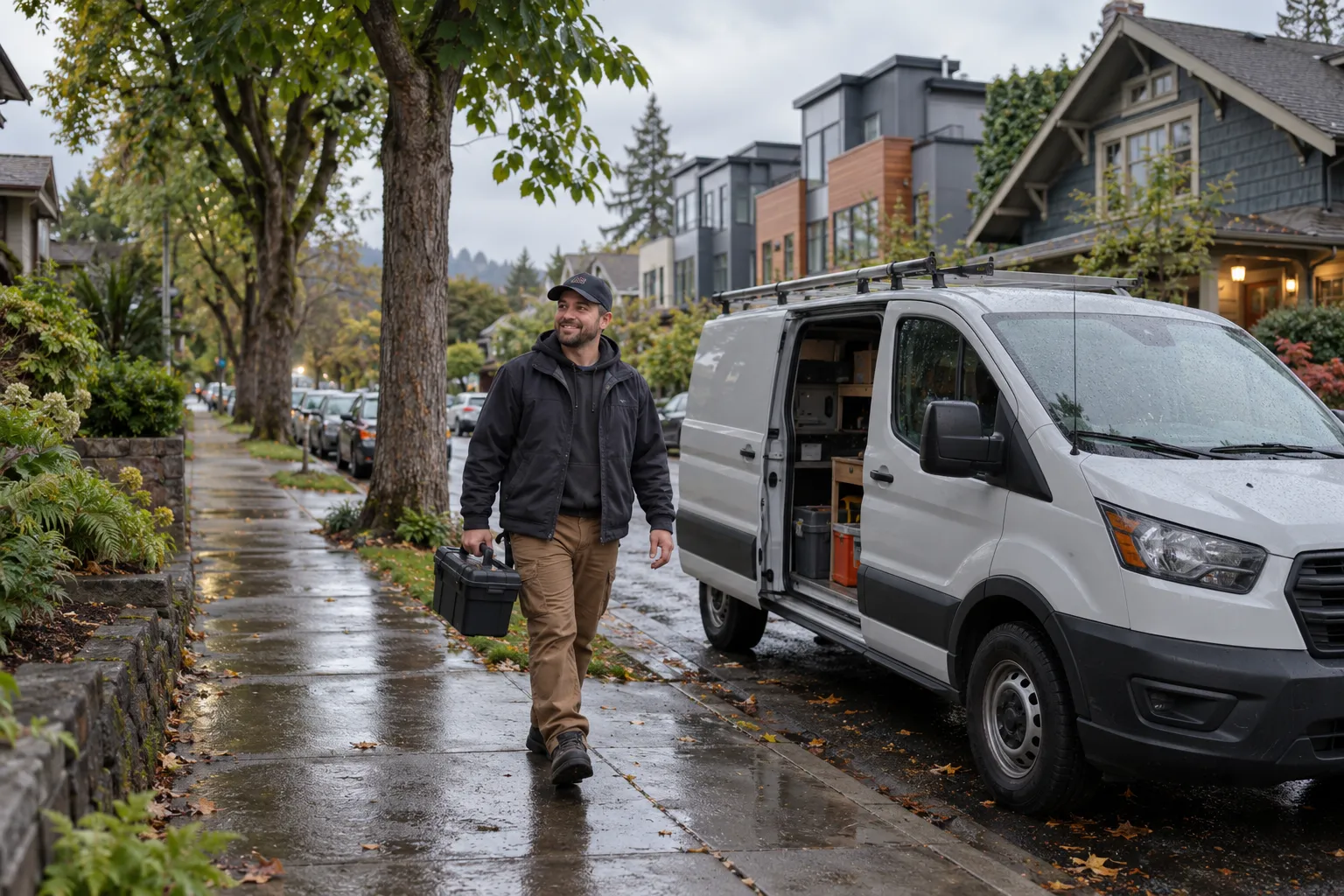
Need furnace repair help in Yelm?
Tell us what is wrong and when you are home. Request an estimate and a local provider will follow up. Prefer to talk? Request a callback to check provider availability.
No obligationRequest a furnace estimate
A cold house disrupts everything. Mornings get rushed, kids bundle up, and the evening routine falls apart. Lisasense Heating & Air keeps the fix simple. First, describe the problem. Next, request an estimate. Then you are matched with an independent HVAC service provider in the Yelm area.
Lisasense Heating & Air is a referral service. It does not repair furnaces. The providers in our network do the work, and they set their own prices and schedules. Many can plan visits around school runs and job hours. Wet, mild weather often means the furnace runs in long, steady cycles, so small faults show up fast. Whether you live in an older craftsman house or a newer townhome, this page helps you sort the urgent from the routine and decide what to do next.
If you smell gas, safety comes before heating. Do not wait for a repair quote.
1. Do not use switches, lighters or phones inside the house. 2. Get everyone and the pets outside. 3. From outside, contact your gas utility or emergency services. 4. Stay out until a professional says it is safe.
Also treat a carbon monoxide alarm as an emergency. Get outside into fresh air and seek help right away.
Our long, rainy season is mild, but damp air still makes a house feel cold. Your furnace may run for hours on end. That steady work exposes weak parts. Furnaces tucked in a crawl space can also pick up moisture and dust.
Spend five minutes on these. They are safe for most homeowners.
Set it to heat. Raise it a few degrees above room temperature. Replace the batteries if the screen is blank.
A clogged filter chokes airflow. It can make the furnace shut off early. Swap in a clean one if yours looks gray and packed.
Look at the breaker panel. Find the service switch near the furnace; it looks like a light switch. Make sure it is on.
Open the vents and move furniture or rugs away. Blocked vents cause uneven rooms.
If the furnace still does not run, stop there. Do not open panels or touch the burner.
Sort what you see by urgency.
Busy homes cannot lose a whole day. When you request an estimate, mention your schedule. Say when kids leave for school and when someone is home. Many providers can offer a window that fits. Request a callback to check provider availability if heat is out and the house is cold.
1. The provider asks what you noticed and when it started. 2. They inspect the furnace, filter, thermostat and venting. 3. They test the parts that start and run the heat. 4. They explain the problem and give a written quote. 5. With your approval, they repair it and test again.
A repair makes sense for a newer furnace with one failed part. Replacement may be worth a look when problems pile up.
If you search for furnace replacement near me, ask the provider to quote both options in writing. Then compare. Heating and cooling equipment is a big purchase, so there is no rush to decide in the cold.
Autumn is when the first cold, rainy days test your furnace. A check before the wet season is easier than a breakdown during a windstorm and a power flicker. Many homes also use the same HVAC service for AC in summer, so ask if a seasonal checkup fits your plan.
Some policies may cover sudden damage. Check your policy. Providers can often help document damage for a claim.
First, do the safety check. Next, run the quick checks. Then request an estimate and let a local provider take it from there.
Providers can look at ignition, venting and the burner, so gas and carbon monoxide risks get proper attention.
A provider finds the failed part and explains it in plain words.
Ask for a clear quote with parts and labor before any work starts.
Many providers can fix common parts, test the furnace, and tell you when replacement looks smarter.
These are typical U.S. ranges. Your price depends on the furnace, the part and the job. Always get a written quote from the provider before you approve work.
| Item | Typical range | Notes |
|---|---|---|
| Diagnostic visit | $75 – $200 | Often applied to the repair if you proceed |
| Ignitor or flame sensor | $100 – $350 | Common cause of no heat |
| Thermostat replacement | $100 – $400 | Smart models cost more |
| Blower motor | $400 – $1,500 | Varies by motor type |
| Control board | $300 – $900 | Depends on make and age |
| Furnace replacement | $3,800 – $10,000 | Size, efficiency and install work matter |
Tell us what the furnace is doing, any smells or noises, and when it began.
Share your address area and schedule so the match fits your week.
An independent local provider reviews your request and responds.
Read the written quote, approve the work, and choose a time that fits.
Describe the problem, request an estimate, and compare it before you commit to any work.
Local providers do the work and set their own prices.
Ask for visit windows that fit school runs and jobs.
A simple request form keeps the process quick and clear.
Tell us what is wrong and when you are home. Request an estimate and a local provider will follow up. Prefer to talk? Request a callback to check provider availability.
No obligationCommon causes are a dirty filter, a thermostat set wrong, a failed ignitor or a blower problem. Check the filter and thermostat first. If heat is still weak, request an estimate from a local provider.
No. Leave the house, avoid switches and flames, and contact your gas utility or emergency services from outside. Do not use the furnace until a professional says it is safe.
Age, repair history and the type of fault all matter. Older furnaces with repeat problems may be worth replacing. Ask a provider to quote both options in writing.
Tell us what is wrong and when you are home. Request an estimate and a local provider will follow up. Prefer to talk? Request a callback to check provider availability.
No obligation